7 Facts About the City of Cusco
Traveling to Cusco is to live countless unforgettable moments, from the visit to the Inca citadel of Machu Picchu to historical and natural tours where every landscape surprises you. However, what many do not know is that the city of Cusco holds many secrets and curiosities that enrich its essence. Discovering them not only enhances your travel experience but also allows you to explore the ancient capital of the Tahuantinsuyo Empire with a more informed and deeper perspective.
Content
- 1. Its original name means “navel of the world”
- 2. Many colonial buildings are built on Inca walls
- 3. The Cusco Tourist Ticket allows access to the main attractions
- 4. The city of Cusco is shaped like a puma
- 5. Cusco is located 3,399 meters above sea level
- 6. The Cusco Flag
- 7. Cusco preserves Andean rituals
- Frequently Asked Questions
1. Its original name means “navel of the world”
The name Cusco comes from the Quechua “Qosqo,” which means navel of the world. For the Inca culture, the city was not only the capital of the Tahuantinsuyo empire but also the political, spiritual, and cultural center where their worldview was organized.
Being the center also served the city as the starting point of the main Inca roads, “qhapac ñan,” which lead to key archaeological and historical destinations such as Machu Picchu.
Today, Cusco is still known as the historical capital of Peru, as well as the archaeological capital of America.
2. Many colonial buildings are built on Inca walls
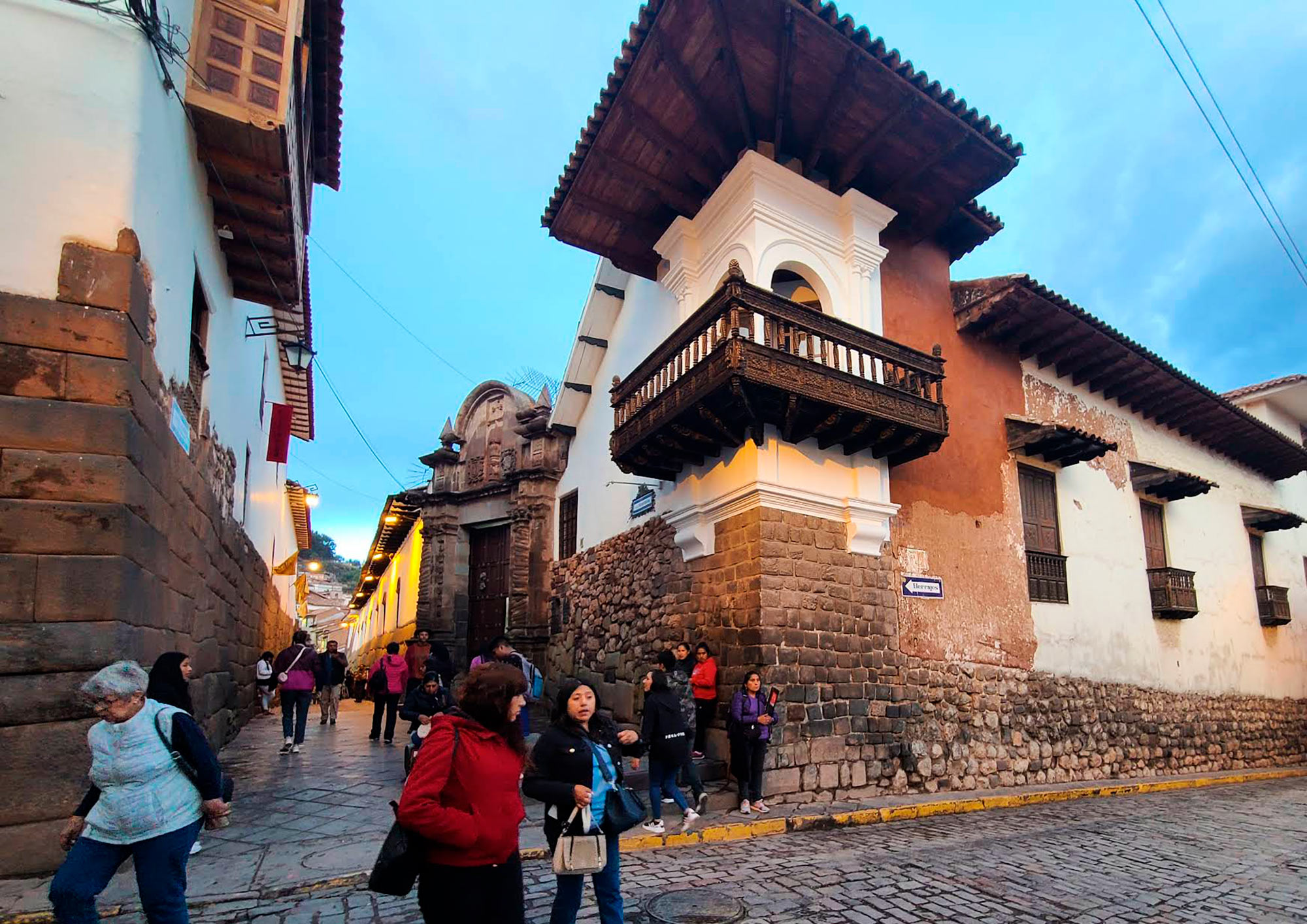
Colonial buildings on Inca walls
One of the most fascinating characteristics of the city of Cusco is that much of its colonial buildings are built on Inca walls and foundations. As you explore the city, you can see this in houses, churches, institutions, and squares, mainly in the historic center.
After the Spanish invasion, much of the city was destroyed, although its foundations were reused for subsequent constructions.
The result is a city where two eras seem to coexist in a single building. This is especially visible in streets like Hatun Rumiyoc, famous for the presence of the 12-angled stone in a massive Inca wall.
| Main Streets of the City of Cusco | |||
|---|---|---|---|
| Street | Location | Historical Significance | Main Features |
| Avenida El Sol | Historic center of the city | Ancient Inca road connecting temples and plazas | Wide, modern, connects key points |
| Calle Hatun Rumiyoc | Path to the San Blas neighborhood | Original Inca road | Inca walls, 12-angled stone |
| Calle Loreto | Intersection between the Plaza de Armas and Calle Maruri | Ancient Inca ceremonial street | Perfectly preserved Inca walls |
| Calle Triunfo | Historic center of the city | Colonial religious area | Churches, colonial architecture |
| Calle Plateros | Plaza de Armas | Historic commercial area | Shops, restaurants, hotels |
| Cuesta de San Blas | San Blas neighborhood | Traditional artisan neighborhood | Cobblestone streets, artisan shops |
| Calle Siete Borreguitos | Plazoleta de Nazarenas | Historic residential use | Narrow, picturesque street |
| Calle Marqués | Historic center of the city | Colonial urban connection | Local commerce, busy traffic |
| Calle Procuradores | Plaza de Armas | Historic commercial area | Restaurants, bars, and cafés |
3. The Cusco Tourist Ticket allows access to major attractions
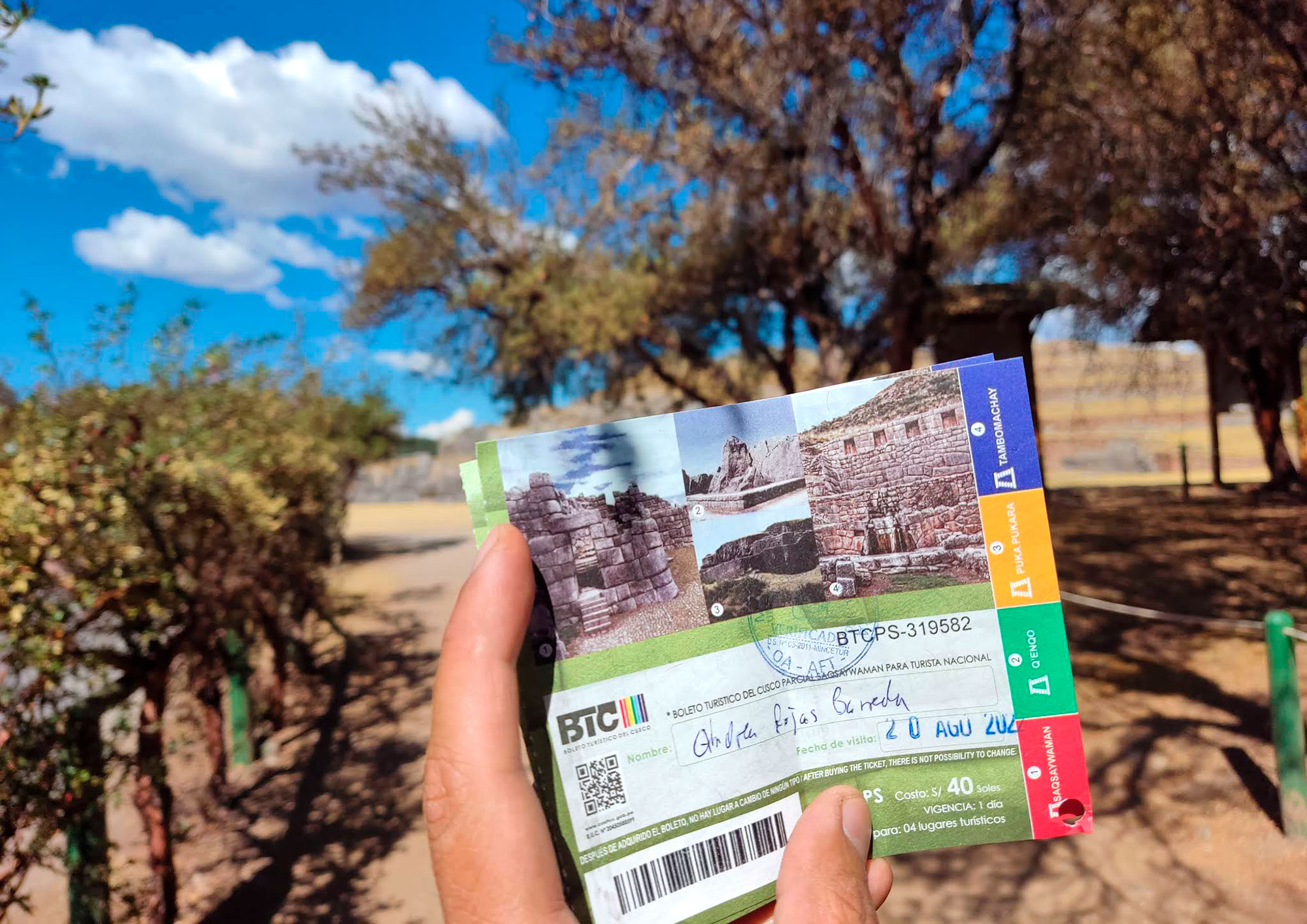
Cusco Tourist Ticket
The city of Cusco has many tourist attractions, the main ones being archaeological and historical sites where you can learn more about the history of the region.
The Cusco Tourist Ticket allows access to most tourist destinations, which are divided into archaeological sites in the city, the Sacred Valley, and the South Valley. It also includes many museums and cultural centers.
There are different types of tickets: one comprehensive and three with different circuit routes:
- Circuit 1: Includes entry to the archaeological sites of Sacsayhuamán, Qenqo, Puca Pucara, and Tambomachay. These are all very close to the city, making it easy to visit them. This ticket is valid for only one day and costs approximately 70 soles.
- Circuit 2: This ticket includes entry to the Tipón archaeological park, the Pikillacta archaeological site, the Qosqo Center of Native Art, the Pachacútec monument, the Regional Historical Museum, the Qoricancha Site Museum, the Contemporary Art Museum, and the Folk Art Museum. It is a diverse tour of the city and the South Valley, valid for two days and costs approximately 70 soles.
- Circuit 3: Includes entry to the archaeological centers of Ollantaytambo, Pisac, Chinchero, and the circular terraces of Moray. It is a Sacred Valley tour that is valid for two days and costs approximately 70 soles.
- Comprehensive Ticket: Includes all three circuits and is valid for ten days. The price is 130 soles.
4. The city of Cusco is shaped like a puma
According to Inca urban planning, the city of Cusco was designed in the shape of a puma. Over time, it has become difficult to perceive this shape, but during the height of the Tahuantinsuyo Empire, the puma’s head could be seen in Sacsayhuamán, its body in the historic center, and its tail in the area where the Huatanay and Tullumayo rivers meet.
The puma holds special symbolism for the Inca culture as it represented the earthly world “Kay Pacha” in the Andean trilogy. The other two symbolic animals are the condor (the celestial world “Hanan Pacha”) and the snake (the underworld “Ukhu Pacha”).
5. Cusco is 3,399 meters above sea level
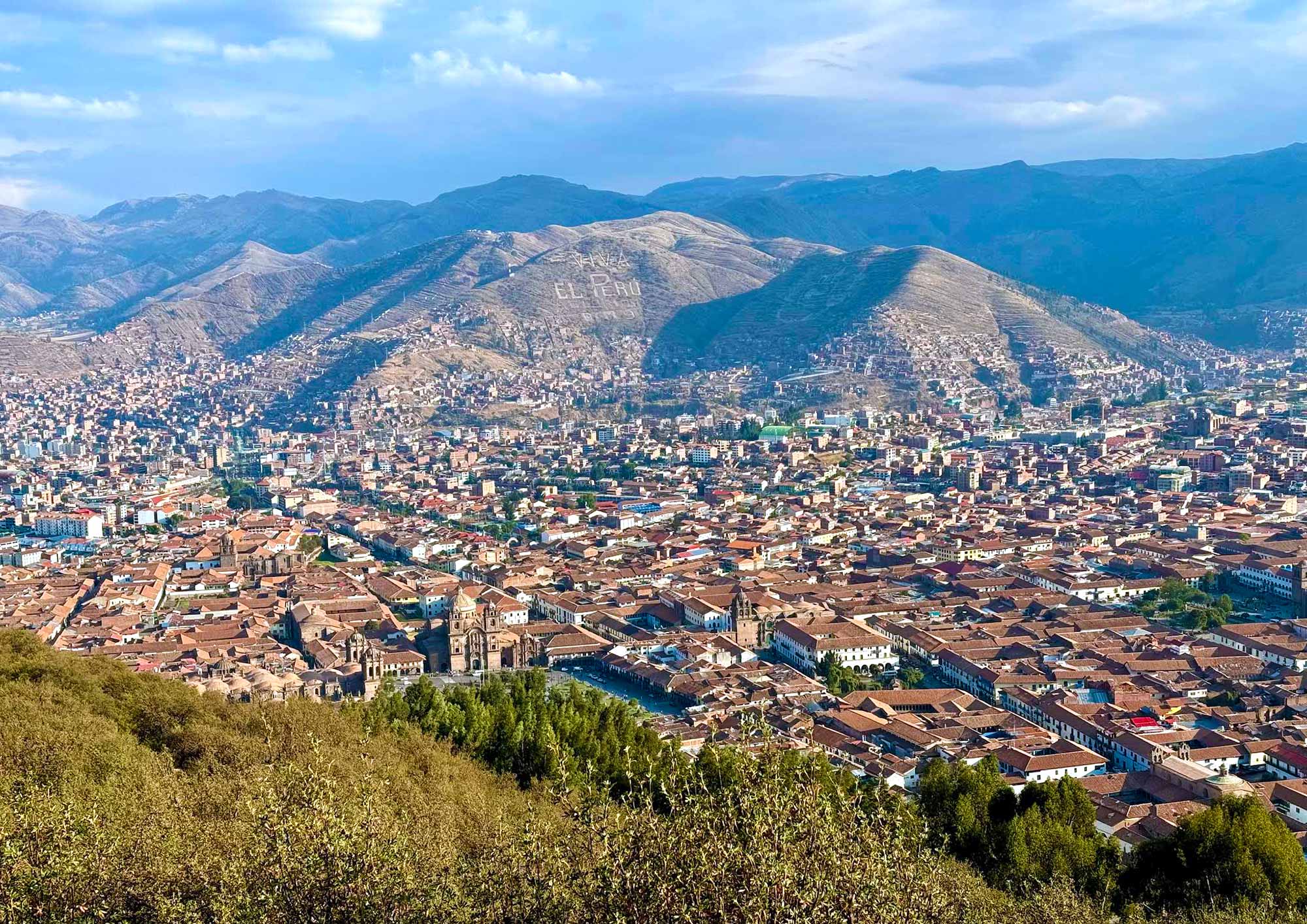
City of Cusco
Traveling to the city of Cusco means entering a high-altitude region. With its 3,399 meters above sea level, it is one of the highest cities in the Americas.
Upon arrival, it is recommended to acclimate during the first days of your trip to avoid altitude sickness or “soroche,” especially if you are not accustomed to high altitudes. Other tips are to avoid physical exertion, avoid fatty foods, refrain from alcohol, and stay hydrated at all times.
Far from being a problem, the city’s geography, thanks to the Andes mountain range, creates a unique environment: dreamlike landscapes, cool weather, blue skies, starry nights, and great biodiversity.
💡 Highest areas in the Cusco region
The historic center of Cusco is at an average altitude of 3,399 meters above sea level, but each tourist attraction, due to the region’s geographic diversity, has its own elevation. Some of the most notable include: the Inca citadel of Machu Picchu (2,430 m.a.s.l.), the 7 Color Mountain (5,036 m.a.s.l.), the Sacred Valley (2,900 m.a.s.l.), and the Humantay Lagoon (4,200 m.a.s.l.).
6. The Flag of Cusco
One of the most striking symbols of the city of Cusco is its multicolored flag, commonly associated with the territorial diversity of the ancient Tahuantinsuyo empire.
The Cusco flag was adopted in 1978, and it is also inspired by the colors of the rainbow (red, orange, yellow, green, light blue, blue, and purple), which is an Andean symbol of connection between the earthly and spiritual worlds.
Although it closely resembles the LGBT flag, the Cusco flag has served as a cultural emblem since Inca times. Today, you can see it flying from the Plaza de Armas.
7. Cusco preserves Andean rituals
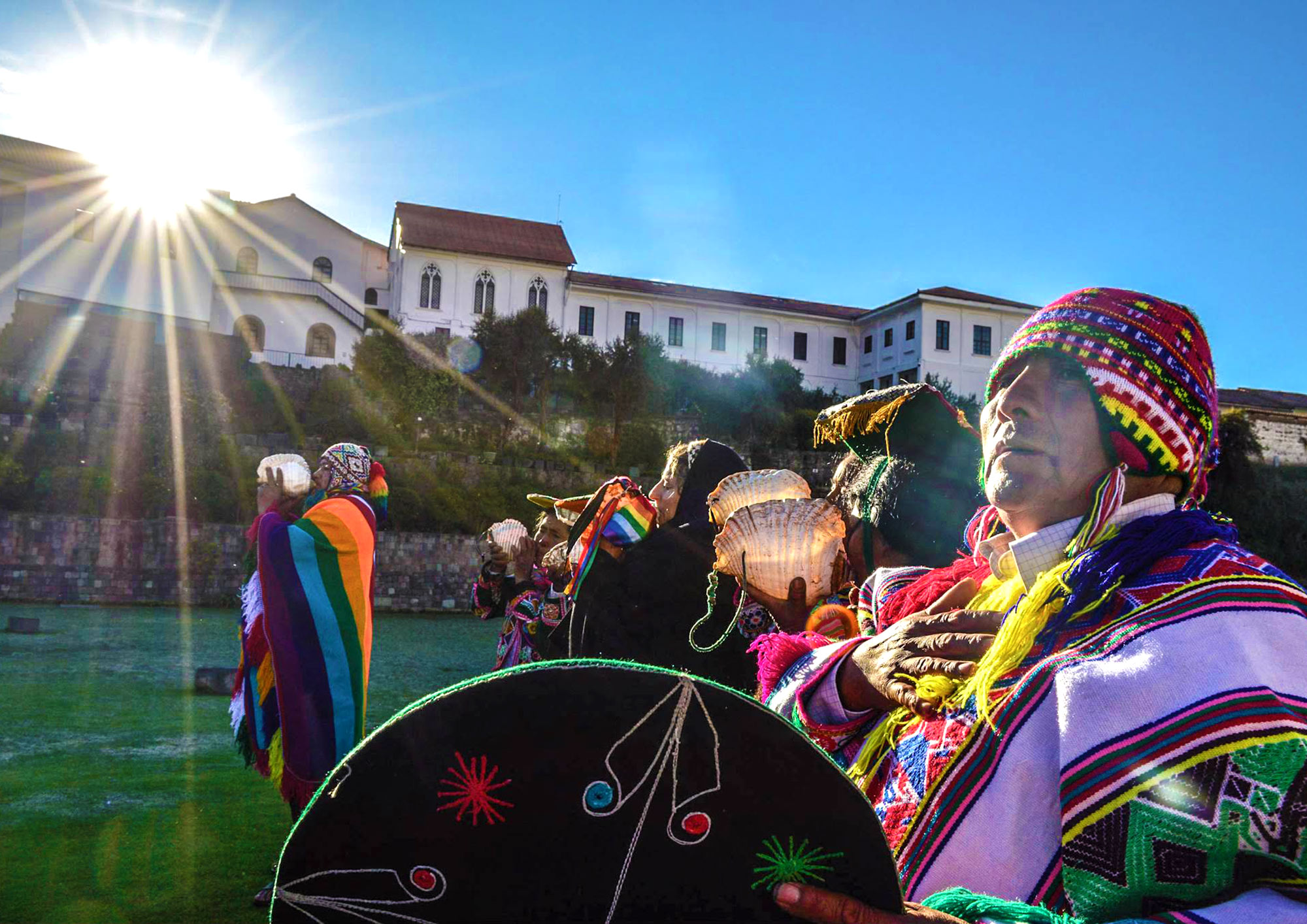
Andean New Year Celebration
Planning a trip to Cusco also means immersing oneself in the mysticism of Andean culture. Many traditions and rituals are part of daily life, based on a deep relationship of respect, care, and reciprocity with nature.
Rituals such as the payment to the earth (offering to Pachamama), Ayahuasca, San Pedro, coca leaf reading, Andean marriage, and meditation retreats are experiences where one seeks to connect with the environment and with oneself, making it a unique tourist attraction in the world.
The Andean way of life is closely related to the care and reciprocity with nature, which has a close relationship between body and soul, both of which need to be cared for to flow in harmony in daily life.